

Ich bin Österreicher
The long journey to becoming an Austrian citizen

I love walking through Belgravia. Everyone you walk past is either monumentally wealthy or a bodyguard with a concealed weapon. On this late September evening, I was on my way to the Austrian Embassy for a special evening in honour of all new Austrian citizens, myself among them.
After a long and incredibly bureaucratic two years, I can finally call myself an Austrian. I became aware of a change in Austrian law allowing descendants of survivors and refugees at the hands of National Socialism to obtain citizenship by way of reconciliation. I had no real urge to obtain Austrian citizenship, other than a mild desire to stand in the short queue at the airport, and a general ‘fuck you’ to everyone who voted for Brexit. However, the more I progressed down the road towards citizenship, the more I learned about my lineage, and what my grandparents sacrificed so that I could be here today.
I only have one memory of my grandma, or Oma, as we used to call her. We were in her kitchen in Hendon, North London. My dad and I were sat at the table, and she was standing at the sink with her back to us. She was, quite aptly, cooking Viennas - a boiled beef sausage. As she poured the boiling water away, steam rose up from the sink and surrounded her, illuminating her silhouette in the late afternoon light.
I think I was about five years old when she died. According to my dad, it was the result of medical malpractice. She had a blood clot in her leg, and when the doctor gave her blood thinners, it shifted to her heart and caused a fatal heart attack.
As a general rule, my dad never spoke about his family. There were, however, some facts that I picked up through osmosis. I always understood that he had a difficult and slightly unstable childhood. I also understood that my grandparents weren’t English, which is why we called them Oma and Opa, not grandma and grandpa. At some point down the line I found out that my Opa had come over from Germany, and my Oma had come over from Austria.
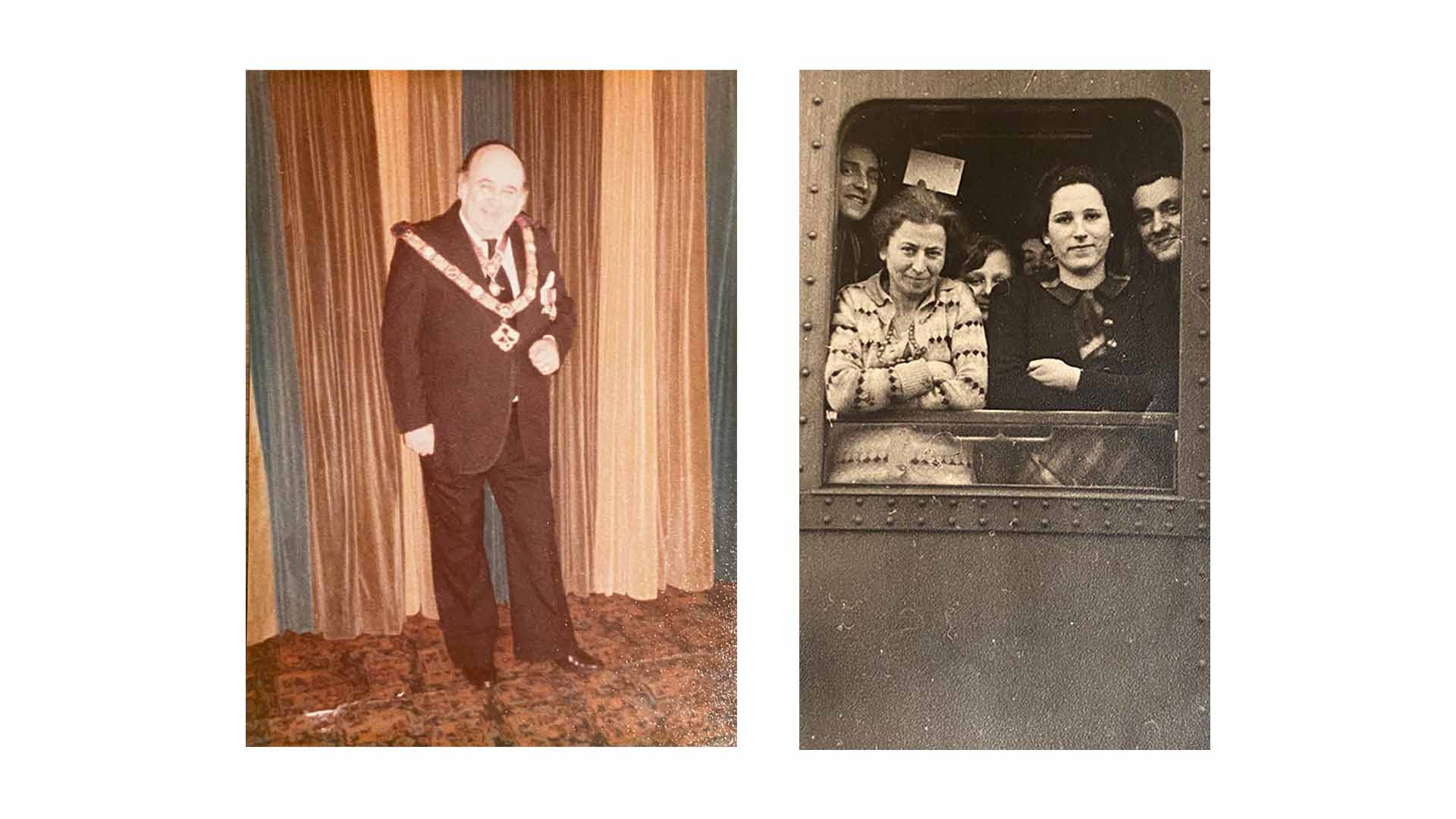
As I grew older, I yearned to find out a bit more about my ancestry. For my graphic design MA, I decided to do a short research project about my dad’s side of the family, which involved sitting down with my dad and interviewing him about his parents. The guise of academic research gave me license to be a bit more direct than would have been possible over a family dinner. From our interview, I found out that my Opa managed to escape Germany at some point in the late 1930s, but was immediately thrown into an internment camp in Scotland upon arrival in the UK due to his lack of paperwork. Apparently, this is why my dad was named Gordon, a Scottish name, rather than something more traditionally Jewish.
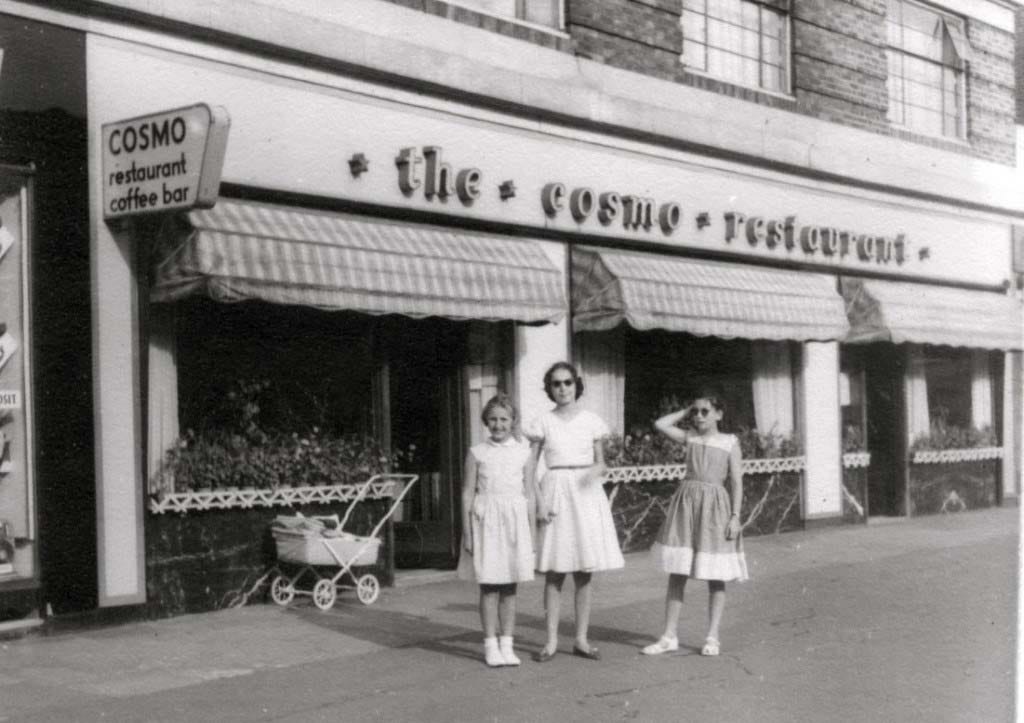
Unlike my Opa, my Oma had an affidavit to work in the UK as a seamstress. She lived in a flat just off Finchley Road, an area of North London which was densely populated by Austrian, German and Hungarian refugees, so much so that it became known as Finchleystrasse. As part of my research, I also learned of a cafe called The Cosmo, a popular meeting spot and safe haven for many of the refugees in London at the time, including Sigmund Freud, who had also recently escaped Vienna and lived in nearby Hampstead. I would love to have been there - women gossiping over goulash, men debating heatedly about the war, Sigmund Freud sitting in the corner with a coffee, absentmindedly people watching while his cigar burned to cinders in the ashtray.
Of course, life in the UK as a refugee was far from easy. I’ve heard it wasn’t uncommon for Londoners to spit at you in the street if you dared to speak German, and nights spent racing down the stairs of Swiss Cottage station to escape the bombs must have been harrowing. But it was better than the alternative. The last piece of information I found out from my dad was that my Oma’s parents didn’t make it out of the war. They were, in his words, dragged outside their house and shot in the head.
It was at this point that my research hit a wall. My dad didn’t have any more memories, and we had no documents, official or otherwise, that could shed more light on my grandparents. However, the documentation I obtained as part of my citizenship application revealed a few more small but significant facts which added a bit more colour to their story.
I found out through my grandparents’ marriage certificate that my Opa was 21 and my Oma was 30 when they got married. A 9 year age difference must’ve been relatively uncommon at the time, almost as uncommon as an Austrian getting together with a German. The certificate also said that my Oma was a waitress when she got married, which is a fact my dad didn’t even know.
I indulged in a theory that my Oma worked at The Cosmo, which may well have been where my grandparents met. I can see it now: my Oma rushed off her feet, delivering schnitzel to one table and espresso to another. The last thing she needed was some German lad trying to chat her up. But with persistence, she probably gave in to his charms, perhaps attracted to the familiarity of a German speaker combined with the exotic nature of his unfamiliar dialect. And then, of course, they would have taken solace in the pain they both shared in being uprooted from their homes, uncertain whether their families were alive or dead, or whether they’d ever get to return home.
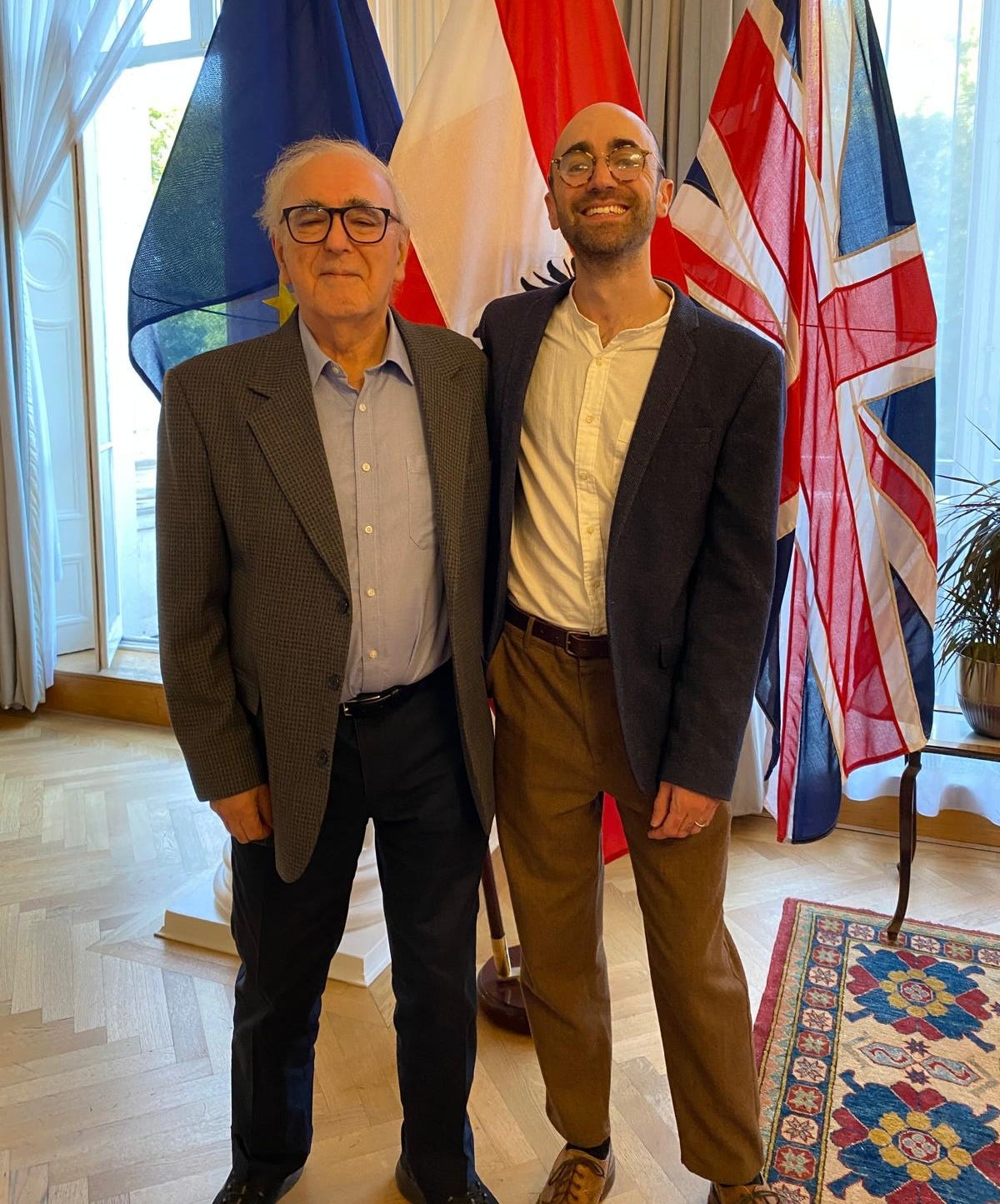
As I walked through the large black double doors and into the opulent foyer of the Austrian Embassy, I found my dad waiting, smiling. There was no doubt in my mind about who I would take as a guest. After all, none of this would’ve been possible without him. As we drank our wine (which I hoped was Austrian Riesling) and looked around at our regal surroundings, I asked him whether he thought Oma would’ve been proud that I had become an Austrian citizen. He thought for a second, then said that he thought she would. Because even though she was betrayed by the country she loved, she was always very proudly Austrian.
And now, so am I. I can’t imagine I’ll move to Austria any time soon, and I don’t think I have the capacity to start learning German. But now more than ever, I feel like part of my Oma is living on through me. Hopefully one day, my daughter will ask why I’ve got a different passport to her, and I’ll tell her all about my Oma and Opa, and what they went through so that we could be here today. And then maybe I’ll make us a big batch of Viennas.
Wunderbare Geschichte, danke fürs Teilen. Alles Gute in Österreich.
A very moving account, beautifully written.